
Sales Training Fundamentals
As a beginner or new salesperson, it is crucial to understand all the core sales training fundamentals in order to succeed in the competitive world of sales. The following are some key insights that will help you master the basics and put you on the road to becoming a successful salesperson. Selling as two core pillars, namely Conversations and Commitments. Conversations are the key to understanding and building relationships with your customers. Building trust and rapport with your customers is essential in order to progress sales and win new business. By taking the time to get to know your customers and their needs, you can better tailor your sales approach to meet their specific requirements. Commitments from the customer act like a checklist for you to gauge whether a real sales opportunity exists. No commitments equal no sales.
Another key aspect of sales is understanding the importance of effective communication. If customers could make purchase decisions without communication, they would not need salespeople. Sales professionals exist to communicate effectively and to facilitate effective communication (both to and from the customer). Your ability to communicate and your company’s ability to are both critical. As a salesperson, you must be able to clearly articulate the benefits of your product or service and address any objections or concerns that may arise. By honing your communication skills, you can build credibility with your customers and increase your chances of making a sale.
Additionally, it is essential to have a strong understanding of your product or service. You must be able to confidently answer any questions that your customers may have and showcase the value that your product or service can provide. By being knowledgeable about what you are selling, you can inspire confidence in your customers and increase your chances of closing a sale. In conclusion, mastering the fundamentals of sales is essential for beginner salespeople looking to succeed in the world of sales and marketing. By building relationships, honing your communication skills, and understanding your product or service, you can increase your chances of closing sales and achieving success in your sales career.
Set Sales Goals
The ability to set sales goals will be your map on your journey to becoming a successful salesperson. Goals have a profound psychological impact. They influence our behavior, guide our focus, and shape our decision-making processes. When we set goals, we are essentially programming our minds to identify and pursue opportunities that align with our aspirations. This alignment between our goals and actions is what ultimately leads to the fulfillment of our deepest desires. One of the most critical aspects of goal setting is clarity. Vague goals are like navigating a ship in foggy waters; they offer little direction and often lead to confusion and frustration. Clear, well-defined goals, on the other hand, provide a distinct vision of what we want to achieve. They make the journey towards achievement more straightforward and focused.
Without clear goals in mind, it can be easy to lose focus and motivation. A dream written down with a date becomes a goal. A goal broken down into steps becomes a plan. A plan backed by action becomes a reality.”
First and foremost, setting sales goals helps you to stay motivated and focused on your objectives. By having a clear target in mind, you are more likely to push yourself to achieve it.
Whether it’s a monthly sales target or a goal to increase your customer base, having a goal gives you something to work towards. When setting sales goals, it’s important to make sure they are specific, measurable, achievable, relevant, and time-bound. This is commonly referred to as the SMART criteria. Short-term goals are things that you might want or have to do today, tomorrow, or within the next few weeks. They are things that you need to do SOON. Medium-term goals are things that you want or have to do in the next few months or within the year. They are things you need to do A LITTLE LATER. Long-term goals are things you want or have to do later on in life, whether it is next year, 10 years from now, or even longer without a specific end date. They are things you do MUCH LATER.
Lastly, don’t be afraid to adjust your sales goals as needed. If you find that you are consistently falling short of your targets, take a step back and reevaluate. Maybe your goals are too ambitious, or perhaps you need to implement new strategies to reach them. By being flexible and willing to adapt, you can set yourself up for success in the world of sales.
Understand Who Are Your Target Customers
Understanding your target customers is crucial to the success of any sales role. As a beginner salesperson, it is essential to have a clear understanding of who your target customers are in order to effectively tailor your sales approach and messaging to meet their needs. The first step in the selling process is prospecting, which means identifying qualified potential customers. Approaching the right potential customers is crucial to the selling process, and increasing prospecting effectiveness is the fastest way to boost sales. Prospects can be qualified by their financial ability, volume of business, special needs, location, and possibilities for growth.
What does it involve?
Identifying possible prospects: before you can attract prospects, you need to identify a prospect profile. There will be a number of questions depending on your situation and market, but they are likely to include variations of the following:
- Who, specifically, will buy from me?
- Why, specifically, will they buy from me?
- Where, specifically, will I find them?
- How, specifically, will I know them from other people who are less likely to buy from me?
Before contacting a prospect, you must learn as much as possible about the organization and its buyers. Gathering information allows you to understand possible problems even before discussing them with the prospect. Do not think that every prospect you have identified represents a possible sale. If you do not qualify objectively, you waste time that could be spent with people who are more likely to buy! You need to establish qualification criteria – aspects that you know to be true or untrue for most people who would buy from you.

Understanding the Sales Process
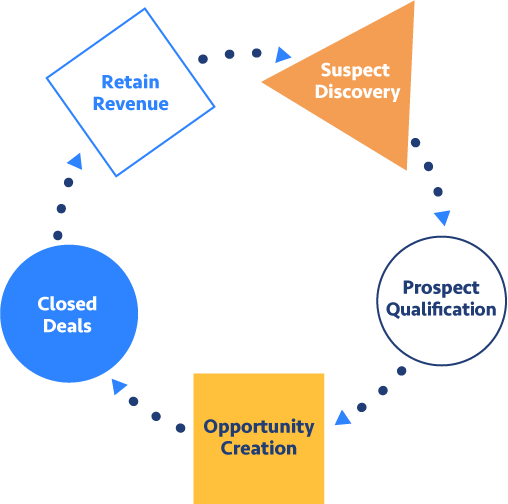
The sales process is a fundamental aspect of any successful sales strategy. The sales process can be defined as ‘a series of conversations, actions, and commitments in making or achieving something,’ and it implies progress towards a desired end result. Whatever you sell, it is likely that there will be a series of steps that you can, or do, follow that take you from an initial conversation with a prospect through to the closing of a sale. There may be some specific nuances and process steps, depending on the nature of your market, product, service, and purchaser.
The sales process typically consists of several key stages, namely prospecting, qualifying, presenting, handling objections, closing, and following up. Each of these stages plays a critical role in moving a prospect through the sales funnel and ultimately converting them into a paying customer.
Prospecting is the process of initiating and developing new business by searching for potential customers for your products or services. The goal, of course, is to move these prospects through the sales pipeline until they convert to revenue-generating customers. This stage requires you to conduct thorough research, leverage various channels, such as social media and networking events, and craft compelling messages to capture the prospect’s attention. Make sure you engage in enough prospecting activity: you must make time for prospecting if you are to achieve consistent sales results. It is not simply something to do when the sales are not coming in. Be objective in your qualification of prospects be realistic and make decisions on objective criteria. The outcome from this first stage of the sales process is qualified prospects who enter the sales pipeline to be managed through the other steps of the sales process.
Qualifying is the next step in the sales process, where you determine whether the prospect has a genuine need for your offering, the authority to make purchasing decisions, and the budget to afford your product or service. To qualify an opportunity, you need to find out more about the prospect and their specific needs through questioning and listening skills. Building the motivation to make a buying decision: asking more questions will help turn a need into something that motivates the person to take action—to want to buy. They need to see the benefits of taking action.
Presenting your solution involves building a compelling case that confirms why your solution is the ideal fit for the prospect and their needs. It is important at this stage to consider things from the prospect’s perspective rather than your own. This stage may be part of the same discussion as the needs identification, or it might be a separate meeting or discussion. The key skill here is influencing, and you can only influence effectively if you have all the facts from the prospect to form the basis for your presentation. The outcome you are looking for is a buyer who is convinced of the benefits of your product or service and identification of what you need to do in order to close the sale.
Closing is a process that either completes a sale or moves you a step closer to it. If all you’ve accomplished is arriving at the end of your sales process or final presentation without stating your case or asking for the next step, you haven’t really closed. Closing is a process, not an event. To bring a sale to a successful conclusion, you should have gained a series of commitments along the way. These commitments stack up to a final commitment to buy. So, closing a sale is, in effect, confirming to move forward (to sign up, etc.).
Thinking of the ‘close’ as an act that happens at the end is simplistic and unrealistic. It happens throughout the process, once the door is ajar. A brilliant salesperson tests for commitment through all stages of the sale and will abandon the process if there is no real interest or commitment from the other party. Of course, you must believe you can get the deal and that the deal is good for the prospect.
In carrying out sales process steps and activities, you will use a variety of observable behaviors and skills to help achieve a result. These include:
- The extent to which you build rapport (a harmonious connection) with the other person.
- Your ability to use effective questioning to uncover buyer needs.
- Your ability to influence the buyer to see the benefits of the product or service we are selling.
- Your effectiveness on the telephone to secure a meeting.
- The way in which you conduct your meetings, including how much you speak relative to the prospect.
Sales Communication Skills
‘Communication’ derives from the Latin communis, meaning ‘common’ or ‘shared.’ When we communicate, we are trying to match meanings. Research proves that most human communication mixes the intentional and the unintentional. We all know that we communicate a great deal without meaning to, through body language, eye movement, and tone of voice.
As a beginner salesperson, it is important to develop these sales skills in order to build strong relationships with clients and close more deals. One of the most important aspects of effective communication is active listening. This means truly listening to what your clients are saying, rather than just waiting for your turn to speak. By listening carefully to your clients’ needs and concerns, you can better understand how to position your product or service as a solution to their problems.
The most effective communication makes ideas explicit. We may take one idea and pit it against another. We may seek the evidence behind an idea or the consequences of pursuing it. We might enrich an idea with our feelings about it. Whatever strategy we adopt, our purpose in communicating is to create and share ideas. Ideas (vision, future, solutions, resolutions) that our customers can latch on to.
Talking is principally the means by which we advocate our point of view, our ideas, and our thinking. Listening is the process of inquiring into the other person’s point of view, their ideas, and their thinking. So, when it comes to understanding communication, in our brains, the left hemisphere excels in pinning down meaning by building up a picture from facts and other evidence. The right hemisphere of the brain, on the other hand, maintains open, present awareness and has appreciation of a wider, more comprehensive meaning, like a constant flowing fountain within.

Building Trust And Rapport with Customers
Regardless of their title or position, you should always strive to build rapport with whomever you speak. You can do this easily by remembering that it is not what you say but how you say it that will have the most impact. So, focus on how the person you are influencing speaks: the speed, volume, and tone of the voice, as well as how they breathe. Also, listen to what they say—and match their language. Remember that on the telephone we only have the voice and the words on which to focus.
In selling, rapport is the ability to relate to others in a way that creates a climate of trust and understanding. People generally do not buy from people they do not like. So, rapport is all about creating a connection with your customers, gaining their trust, and ultimately, making them feel comfortable enough to make a purchase. The best sales conversations balance advocacy and inquiry. They are a rich mix of talking and listening, of stating views and asking questions.
In sales training for beginners, another key aspect of building rapport is to be authentic and genuine. Customers can easily sense when someone is being insincere or trying too hard, so it is important to be yourself and let your natural personality shine through. If we think about sales relationships we have as a customer, we find that characteristics such as rapport, trust, adding value, honesty, and so on are what are important to us. Any activities we engage in to manage customer relationships should, therefore, demonstrate and develop these traits.